
For the last few years, protein was the only macro anyone talked about. Now fiber is having its moment, and a lot of people are asking the same question: do I have to pick a side?
Short answer — no, and thinking about it as a competition is actually where most people go wrong.
Why this feels like a trade-off
Part of the confusion comes from how these two trends actually show up on your plate. High-protein diets tend to lean heavily on meat, eggs, and dairy — foods that contain little to no fiber. High-fiber diets lean on legumes, whole grains, fruits, and vegetables — foods that do contain protein, but usually less per serving than a chicken breast or a protein shake.
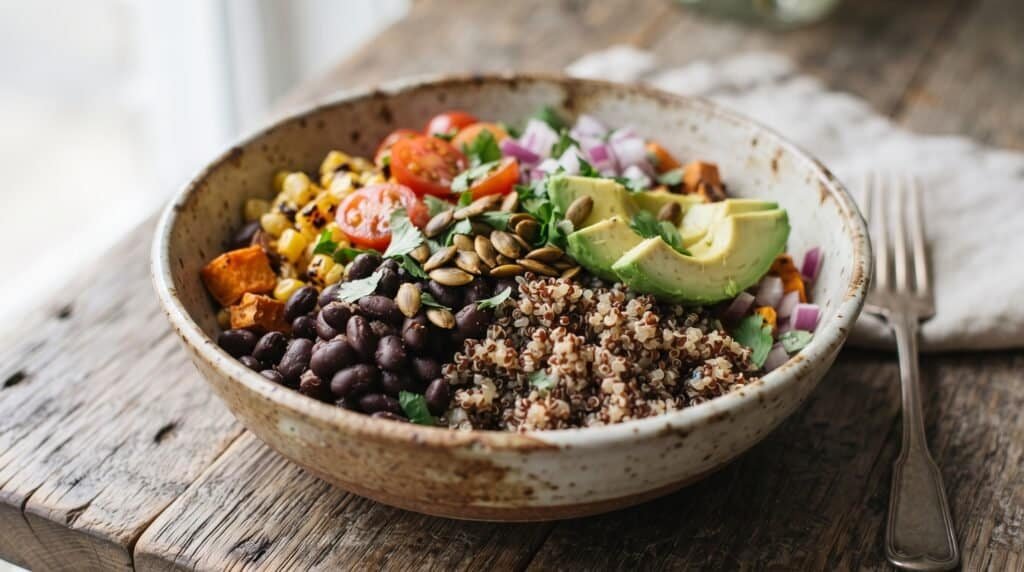
If you build every meal purely around hitting a protein number, fiber tends to quietly disappear. That’s the real tension — not that the nutrients themselves compete, but that the food choices people make to maximize one often crowd out the other.
The foods that do both
The good news: a handful of foods are strong in both categories, and they’re the easiest way to stop treating this as an either/or decision.
| Food | Protein (per serving) | Fiber (per serving) |
|---|---|---|
| Lentils (1 cup cooked) | 18g | 15.6g |
| Chickpeas (1 cup cooked) | 15g | 12.5g |
| Black beans (1 cup cooked) | 15g | 15g |
| Quinoa (1 cup cooked) | 8g | 5.2g |
| Edamame (1 cup) | 17g | 8g |
| Chia seeds (2 tbsp) | 4g | 10g |
Notice the pattern — legumes in particular are the closest thing to a “both” food that exists. If you’re trying to hit both targets, building meals around beans and lentils rather than exclusively around meat gets you further on both numbers at once.
So which one should you actually prioritize?
If you have to pick a lane for a specific health reason (very high physical activity levels typically push protein needs up; digestive or cholesterol concerns typically make fiber the priority), let that reason guide you. But for most people without a specific goal driving the decision, the honest answer is: neither should be sacrificed for the other, because they support different things.
Protein supports muscle maintenance and repair. Fiber supports digestion, gut bacteria, and steady blood sugar. They’re not substitutes — they’re both playing defense on different fronts.
A practical way to think about it
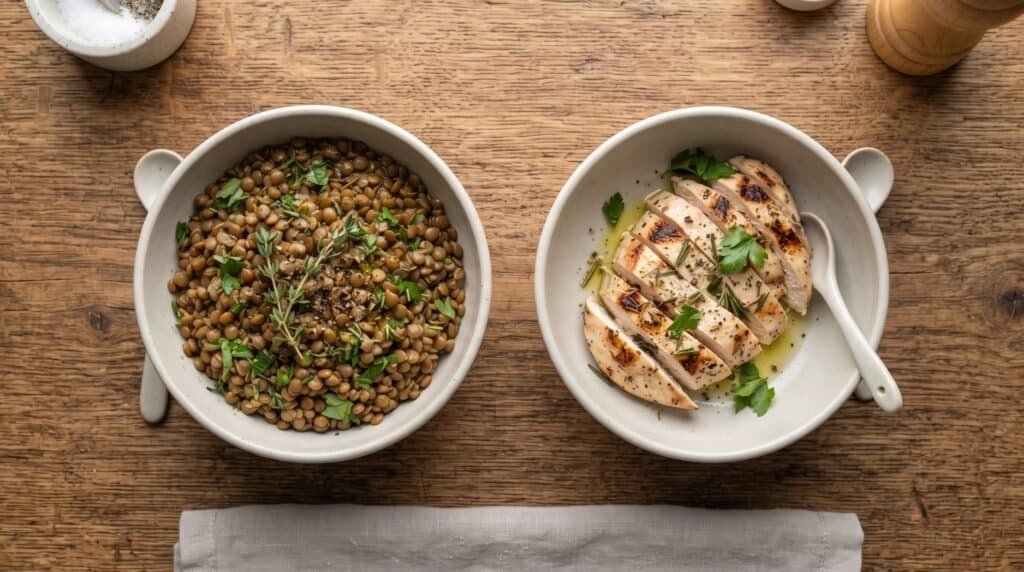
Rather than optimizing one number to the exclusion of the other, aim for meals that include a protein source AND a fiber source, treated as two separate boxes to check rather than one combined score. A lentil bowl with grilled chicken. Greek yogurt with chia seeds and berries. Eggs with a side of black beans. None of these require you to abandon one trend for the other — check our fiber calculator to see how your current protein-heavy meals are scoring on the fiber side, and adjust from there.