A 7-Day High-Fiber Meal Plan for Beginners (With Grams Per Day)

Reading about fiber targets is one thing — actually structuring a week of meals around them is another. This plan isn’t meant to be followed rigidly; think of it as a template showing what a fiber-forward week can realistically look like, with approximate daily totals so you can see how the math adds up.
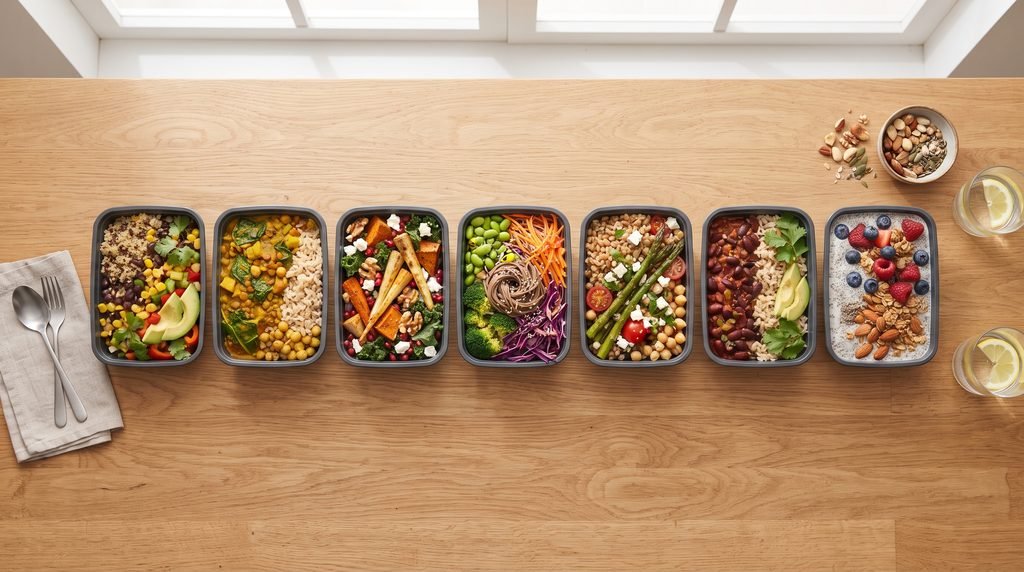
Each day lands in the 28–35 gram range, comfortably covering most adult targets without requiring you to eat unusual food.

Each day lands in the 28–35 gram range, comfortably covering most adult targets without requiring you to eat unusual food.

Day 1

  • Breakfast: Overnight oats with chia seeds and raspberries (~14g)
  • Lunch: Chickpea salad wrap (~11g)
  • Dinner: Lentil soup with a side of whole-grain bread (~10g)
  • Daily total: ~35g

Day 2

  • Breakfast: Greek yogurt with flaxseed and pear (~7g)
  • Lunch: Black bean and quinoa bowl (~13g)
  • Dinner: Roasted broccoli with baked salmon and a side of farro (~10g)
  • Daily total: ~30g

Day 3

  • Breakfast: Avocado on whole-grain toast (~9g)
  • Lunch: Leftover lentil soup (~10g)
  • Dinner: Black bean tacos with corn tortillas and salsa (~12g)
  • Daily total: ~31g

Day 4

  • Breakfast: Chia pudding with almonds (~11g)
  • Lunch: Hummus and veggie plate (~9g)
  • Dinner: Whole-grain pasta with white beans and cherry tomatoes (~10g)
  • Daily total: ~30g

Day 5

  • Breakfast: Bran cereal with sliced banana (~10g)
  • Lunch: Split pea soup (~11g)
  • Dinner: Stir-fried tofu and vegetables over quinoa (~9g)
  • Daily total: ~30g

Day 6

  • Breakfast: Smoothie with spinach, berries, and flax (~10g)
  • Lunch: Barley and roasted vegetable bowl (~9g)
  • Dinner: Chickpea curry with brown rice (~13g)
  • Daily total: ~32g

Day 7

  • Breakfast: Whole-grain waffles with raspberries (~8g)
  • Lunch: Edamame and soba noodle bowl (~8g)
  • Dinner: Roasted vegetable and black bean bowl (~14g)
  • Daily total: ~30g

How to actually use this plan
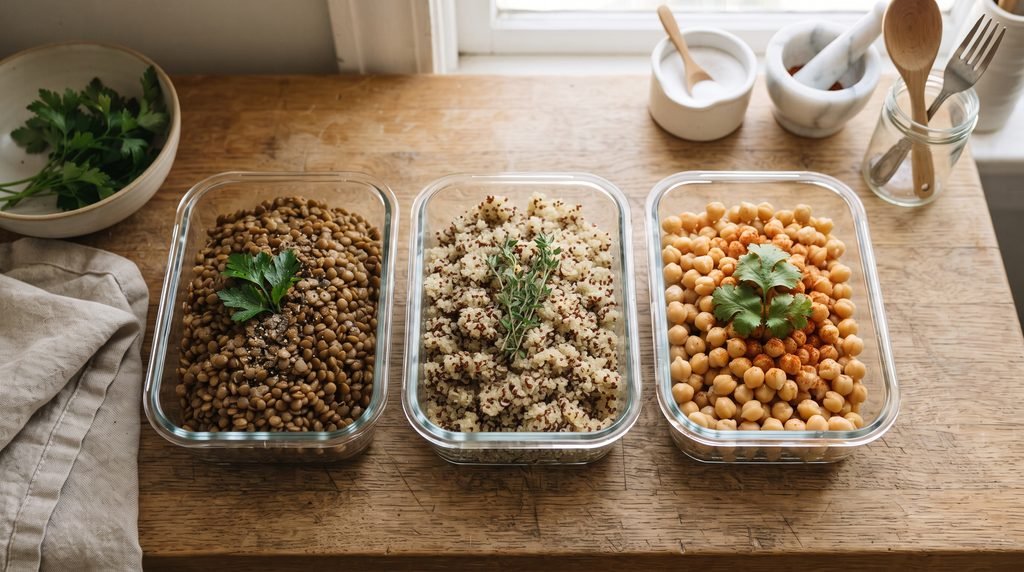
Don’t feel locked into the exact order — swap days around based on what’s convenient, and repeat favorites rather than forcing variety for its own sake. The point isn’t this specific menu; it’s seeing that hitting 28-35 grams a day doesn’t require exotic ingredients or all-day cooking. Most of these meals reuse the same core staples (lentils, chickpeas, oats, chia) prepared a few different ways — batch-cooking beans and grains once at the start of the week makes the whole plan faster to execute.

If you want to check how your own version of a day is scoring, run it through our [fiber calculator] before you commit to a grocery list.

If you want to check how your own version of a day is scoring, run it through our [fiber calculator] before you commit to a grocery list.

12 High-Fiber Snacks for When You’re On the Go

Snacks are usually the first thing to go when a day gets busy, and most grab-and-go options (chips, crackers, granola bars) are surprisingly low in fiber despite sounding healthy. Here are 12 real options that are both genuinely portable and genuinely high in fiber.

Roasted chickpeas
  1. Roasted chickpeas (~6g per 1/2 cup) — crunchy, salty, and shelf-stable for days in a bag.
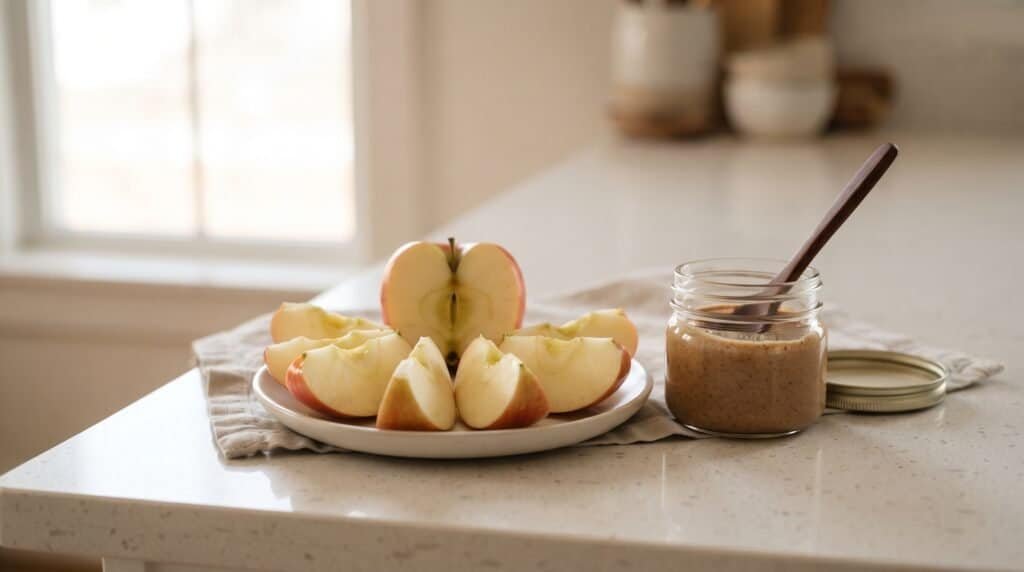
  2. Apple with almond butter (~8g) — the classic combination for a reason; keep the skin on.
  3. Trail mix with almonds and dried figs (~7g) — build your own to avoid the low-fiber candy-heavy versions sold pre-made.
  4. Edamame, shelled (~8g per cup) — needs no prep beyond steaming and salting, keeps well in a small container.
  5. Whole-grain crackers with hummus (~6g) — pack them separately to keep the crackers from getting soggy.
  6. Popcorn, air-popped (~3.5g per 3 cups) — one of the most volume-for-calorie efficient snacks that exists.
  7. Pear (~5.5g) — an underrated portable fruit, sturdier than it looks for a bag or backpack.
  8. Chia pudding cup, pre-made (~10g) — batch-make these in small jars on Sunday for grab-and-go all week.
  9. Roasted edamame or chickpea chips (~5g) — a reasonable substitute if you’re craving something closer to a chip.
  10. Dried figs or apricots, a small handful (~5g) — more concentrated in fiber than most dried fruit, but watch portion size since dried fruit is calorie-dense.
  11. Whole-grain granola bar (check the label) (~4-5g) — not all granola bars qualify; look for one listing at least 4g fiber and whole grains as the first ingredient.
  12. Baby carrots with guacamole (~5g) — avocado-based dips add fiber that ranch or other dips don’t.

The label-reading trick that makes this easier

The label-reading trick that makes this easier

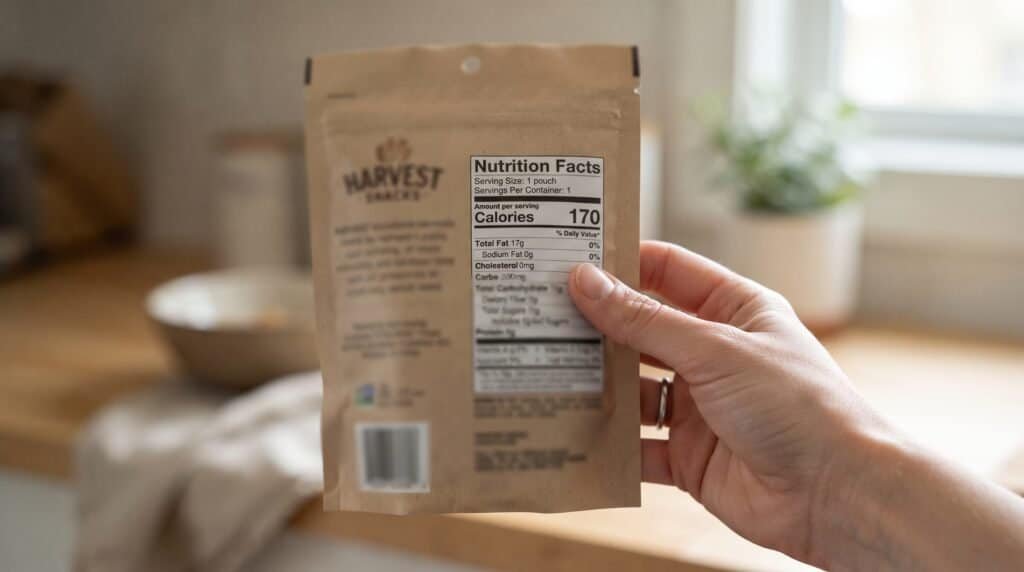
When shopping for packaged snacks, a quick rule of thumb: if a snack doesn’t list at least 3 grams of fiber per serving on the label, it’s not doing much for your daily total, regardless of how “natural” or “whole grain” the packaging claims to be. Checking the actual number takes five seconds and saves you from snacks that sound healthy but aren’t contributing much.

10 High-Fiber Lunch Ideas You Can Actually Bring to Work

A strong high-fiber breakfast can fall apart by lunchtime if the midday meal is a plain sandwich or a bag of chips from the vending machine. Lunch is also where most fibermaxxing plans quietly fail — not because people don’t care, but because “high fiber” and “portable” don’t always sound compatible. They are. Here are 10 options built specifically to survive a lunch bag and a microwave-free office.

1. Chickpea salad wrap (~11g)

Mash chickpeas with a bit of mayo or Greek yogurt, mustard, and diced celery — it works exactly like tuna salad but with more fiber. Wrap it in a whole-grain tortilla.

Chickpea salad wrap

2. Lentil soup, thermos-ready (~15g)

Batch-cook a big pot of lentil soup on Sunday, portion into containers, and it travels well in an insulated thermos — no microwave required by lunchtime.

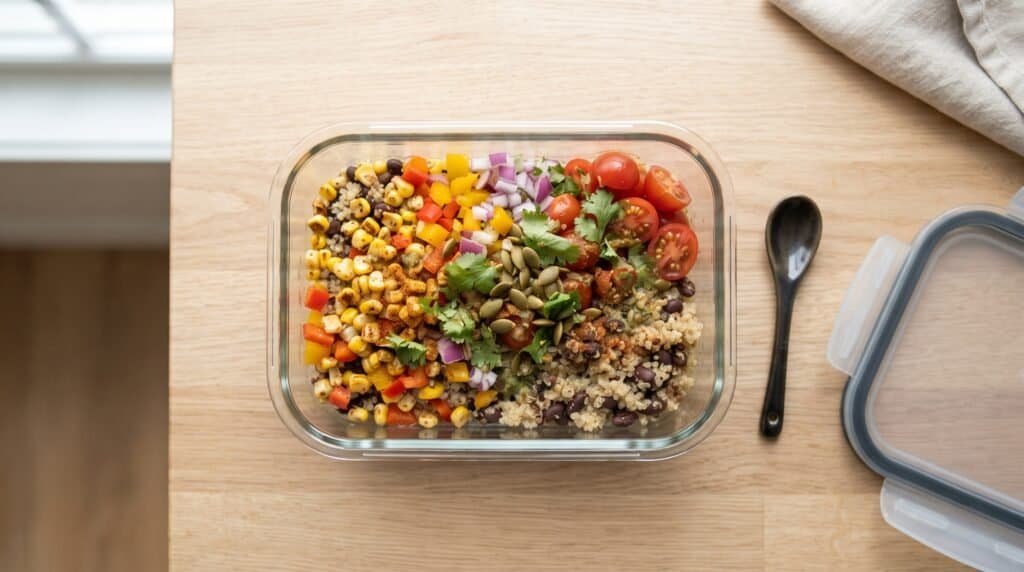
3. Black bean and quinoa bowl (~13g)

Cooked quinoa, black beans, corn, diced peppers, and a lime dressing — tastes fine cold, which makes it genuinely low-effort for meal prep.

4. Hummus and veggie plate (~9g)

Hummus (made from chickpeas, already fiber-rich) with sliced bell peppers, carrots, and whole-grain crackers. Zero prep beyond slicing.

Hummus and veggie plate (~9g)

5. Whole-grain pasta salad with white beans (~10g)

Cooked whole-grain pasta tossed with white beans, cherry tomatoes, and olive oil — holds up well overnight in the fridge, unlike leafy salads.

6. Barley and roasted vegetable bowl (~9g)

Barley is an underrated fiber source most people never think to use — swap it in for rice under roasted broccoli and sweet potato.

7. Edamame and soba noodle bowl (~8g)

Soba noodles (buckwheat-based) with shelled edamame and a sesame-soy dressing — eats well cold, unlike most noodle dishes.

8. Split pea soup (~11g)

Similar logic to the lentil soup above — a thermos-friendly, batch-cookable option that happens to be one of the highest-fiber soups you can make.

9. Bean and avocado toast, deconstructed (~10g)

If a full sandwich gets soggy by lunchtime, pack mashed black beans, avocado, and whole-grain bread separately and assemble on the spot.

Bean and avocado toast, deconstructed (~10g)

10. Overnight farro salad (~7g)

Farro (a whole grain) tossed with roasted vegetables and a vinaigrette — like a grain-based coleslaw that actually improves after sitting overnight.

The meal-prep principle behind all of these

Every option above shares one trait: it’s built around a legume, whole grain, or both, rather than leafy greens alone (which are healthy, but relatively low in fiber per serving and don’t hold up well pre-made). If your current lunch routine is a salad that wilts by noon, swapping the base from lettuce to a grain or legume is the single highest-leverage change you can make.

10 High-Fiber Breakfast Ideas That Actually Keep You Full

Breakfast is the easiest meal to fibermaxx, and yet it’s the one most people get wrong — a bowl of low-fiber cereal or a plain bagel can leave you at zero grams before 9am. Front-loading your fiber early means you’re not scrambling to catch up later in the day. Here are 10 real options, ranked loosely by how much fiber they pack in.

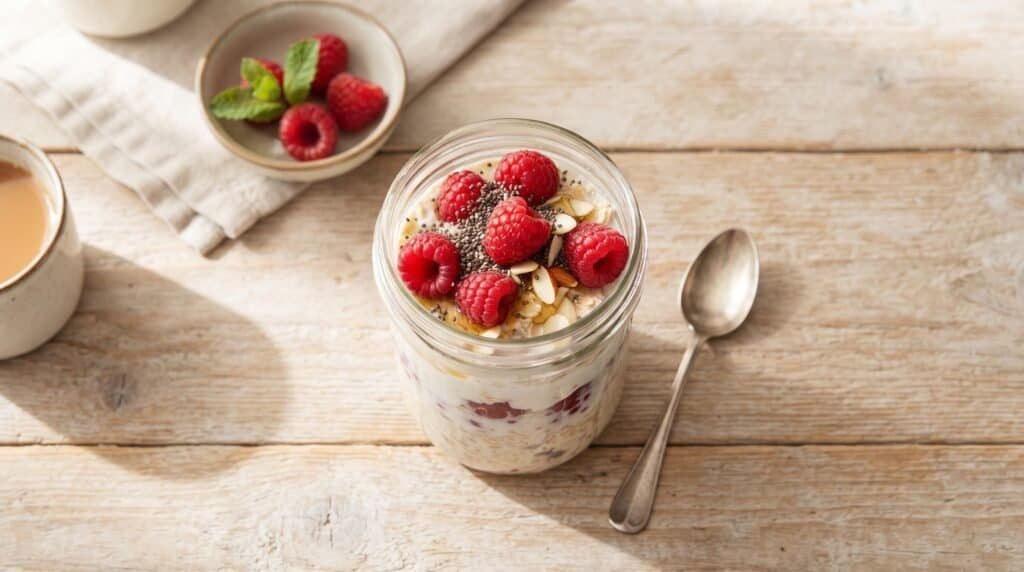
1. Overnight oats with chia and berries (~14g)

Combine rolled oats, chia seeds, milk of choice, and a handful of raspberries in a jar the night before. By morning it’s a thick, spoonable breakfast that needs zero cooking.

2. Avocado on whole-grain toast (~9g)

Whole grain bread already outperforms white bread on fiber, and half an avocado adds another 5 grams. Add a poached egg for staying power.

3. Greek yogurt with flaxseed and pear (~7g)

Ground flaxseed stirred into plain yogurt, topped with a chopped pear (skin on). Simple, and the fiber slows how quickly the yogurt’s natural sugars hit your system.

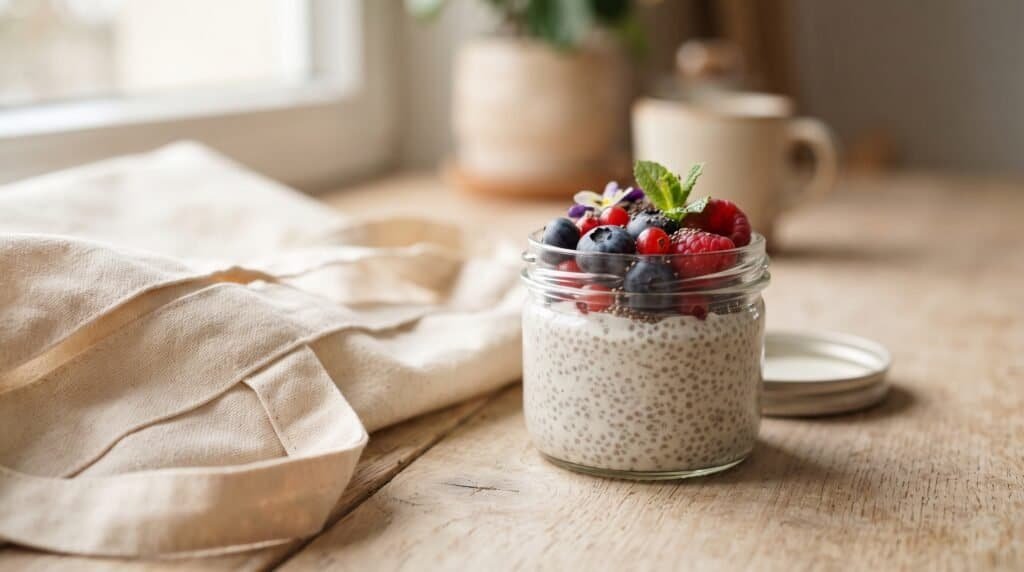
Chia pudding with almonds (~11g)

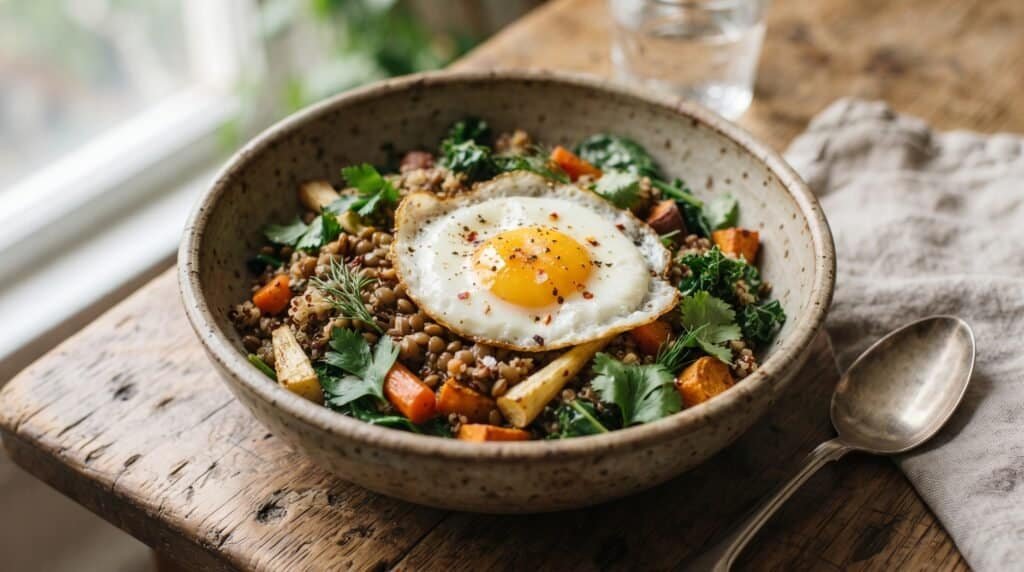
4. Lentil breakfast bowl (~12g)

Not traditional, but effective — leftover cooked lentils topped with a fried egg and hot sauce is a savory, high-protein, high-fiber start that also uses up food you already made the night before.

5. Chia pudding with almonds (~11g)

Chia seeds soaked overnight in milk of choice, topped with sliced almonds in the morning. Naturally thickens into a pudding-like texture.

6. Bran cereal with sliced banana (~10g)

Not every high-fiber food needs to be trendy — a genuine bran cereal (check the label for 5g+ fiber per serving) with a sliced banana on top is a fast, reliable option on busy mornings.

7. Veggie-packed omelet (~6g)

Bell peppers, spinach, and onions folded into eggs. Not the highest-fiber option on this list, but a good way to sneak in vegetables before noon.

8. Apple with almond butter (~8g)

A whole apple (skin on) with two tablespoons of almond butter — grab-and-go, and the combination of fiber and healthy fat keeps you full longer than fruit alone.

Apple with almond butter (~8g)

9. Smoothie with spinach, berries, and flax (~10g)

Blend spinach, mixed berries, a tablespoon of ground flaxseed, and your milk of choice. The blender breaks down the fiber structurally but the gram count stays intact.

10. Whole-grain waffles with raspberries (~8g)

Look for a whole-grain or oat-based waffle mix rather than refined white flour, and top generously with raspberries instead of syrup.

Whole-grain waffles with raspberries (~8g)

The pattern worth noticing

Every option above leans on the same few fiber powerhouses: oats, chia, flax, berries, legumes, and whole grains. Once a few of these become breakfast habits, hitting your daily fiber goal stops being something you have to think about — see our fiber calculator to check how your usual breakfast is already scoring.