Packaging loves the word “fiber.” Made with whole grains, it is an excellent source of fiber and boosted with prebiotic fiber. Reading the actual label takes 10 seconds and shows how to read nutrition label fiber.
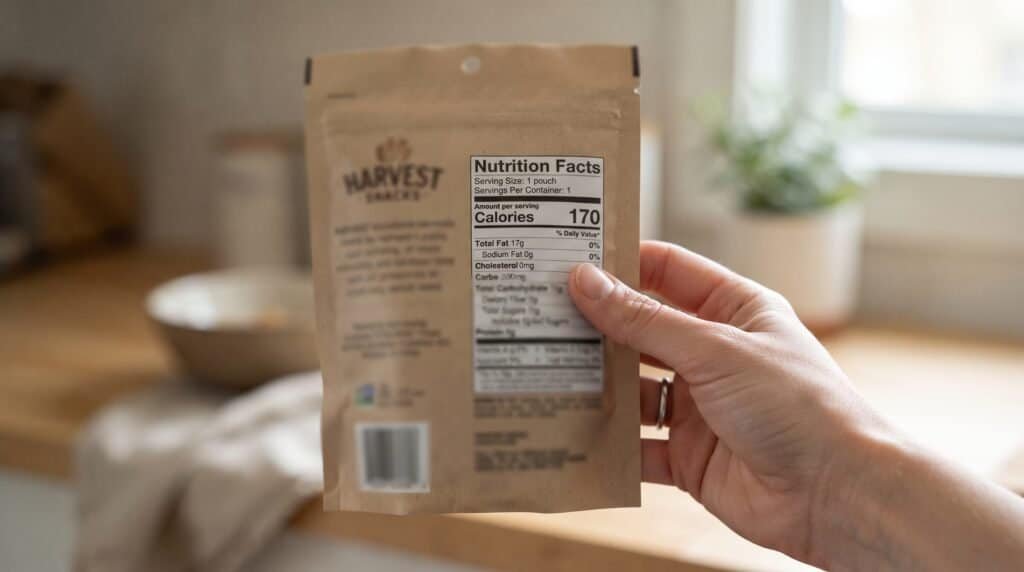
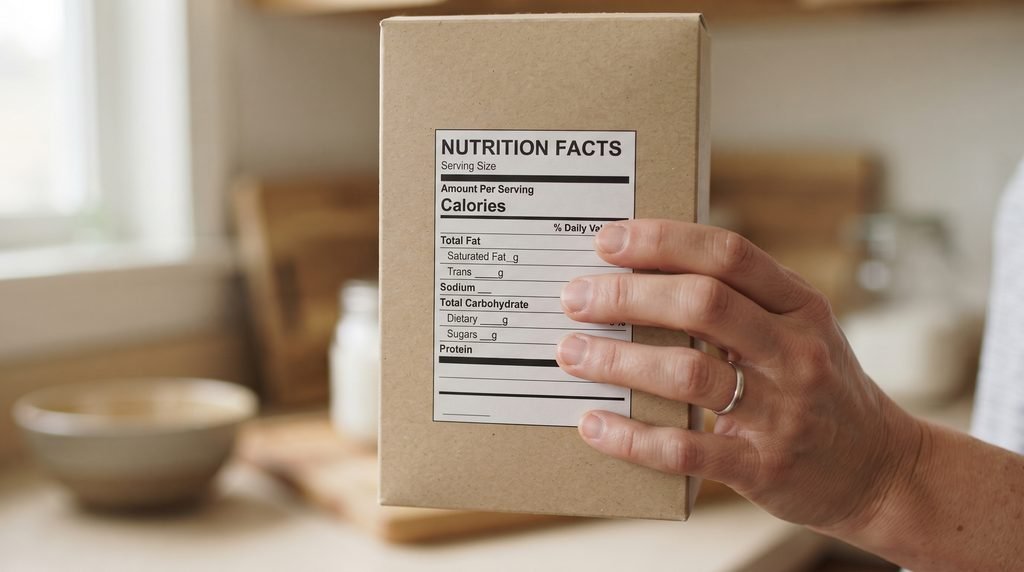
Step 1: Find “Dietary Fiber” under Total Carbohydrate
On a U.S. nutrition label, fiber is listed under Total Carbohydrate, alongside sugars. This shows how to read nutrition label fiber in practice. This is the only number that matters; ignore front-of-package claims entirely and go straight here.
Step 2: Check the serving size before the fiber value
This is where most people get misled.
A cereal might list 5g fiber, but the serving size matters.
If you usually eat one cup but the serving is 1.5 cups, you may get less.
This shows how to read nutrition label fiber clearly.
Always check serving size and fiber grams together, not the fiber number in isolation.
Step 3: Use this rough scale to judge what you’re looking at
- Under 1g per serving: Not a meaningful fiber source, regardless of packaging claims.
- 2.5–4.9g per serving: A “good source” of fiber — worth including but not a fiber powerhouse.
- 5g or more per serving: An “excellent source” — genuinely worth prioritizing.
These thresholds roughly mirror how the FDA defines “good source” and “excellent source” claims. If you see a “good source of fiber” label, you know that means somewhere in the 2.5–4.9g range, not a huge amount.
Step 4: Watch for “isolated” or “added” fiber
Some products boost their fiber number with isolated fibers like inulin or chicory root extract.
They are added to hit a marketing threshold.
This isn’t necessarily bad, but it behaves differently than fiber from whole foods.
Inulin tends to cause more gas, and added fiber lacks vitamins and minerals.
Check ingredients: if fiber is high and first ingredients are refined flour and sugar, it’s fortified junk food.
Think about how to read nutrition label fiber when evaluating such products.
A quick real-world example
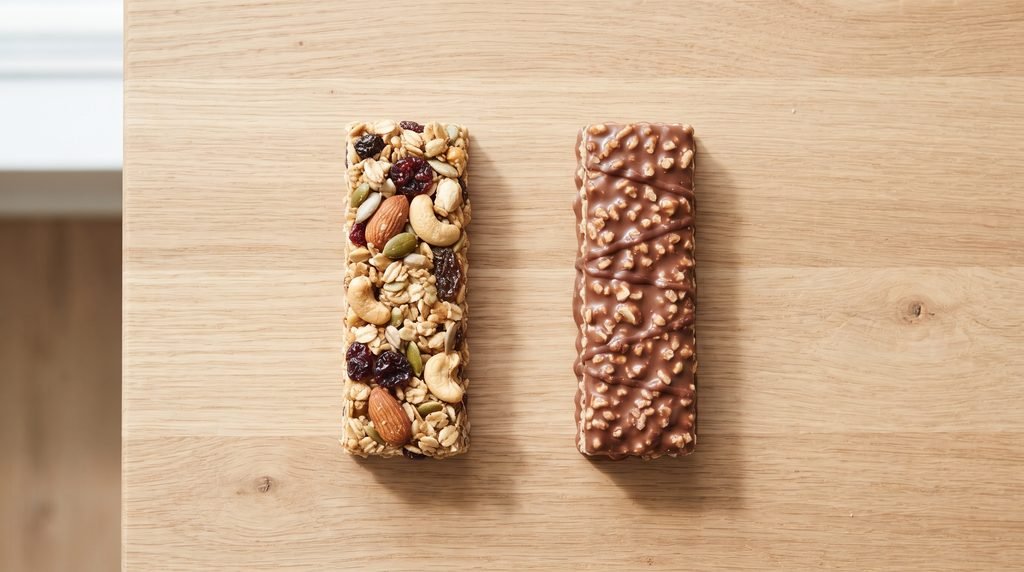
Compare two granola bars.
| Bar A | Bar B | |
|---|---|---|
| Serving size | 1 bar (40g) | 1 bar (35g) |
| Fiber | 5g | 3g |
| First ingredient | Rolled oats | Sugar |
Bar A wins clearly. It has higher fiber, a smaller serving, and the ingredient list confirms it is built around a genuine whole-grain base rather than fortified after the fact.
The one habit that actually matters
You don’t need to memorize any of these numbers.
A simple habit helps with how to read nutrition label fiber.
Before a packaged food goes in your cart because it looks healthy, flip it over.
Check dietary fiber against the serving size.
That single check filters out most of the marketing noise instantly.
![If you want to check how your own version of a day is scoring, run it through our [fiber calculator] before you commit to a grocery list.](https://myfibermaxx.com/wp-content/uploads/2026/09/Canvas_grocery_bag_with_vegetables_2K_20260912175608-1024x572.jpeg)