Psyllium vs. Inulin vs. Methylcellulose: Which Fiber Supplement Is Right for You?

Once you start paying attention to your fiber number, the supplement aisle stops looking helpful and starts looking confusing. Psyllium husk, inulin, methylcellulose, acacia — they’re all sold as “fiber,” but they don’t behave the same way in your body, and picking the wrong one for your goal is why some people try a supplement once and never touch it again.
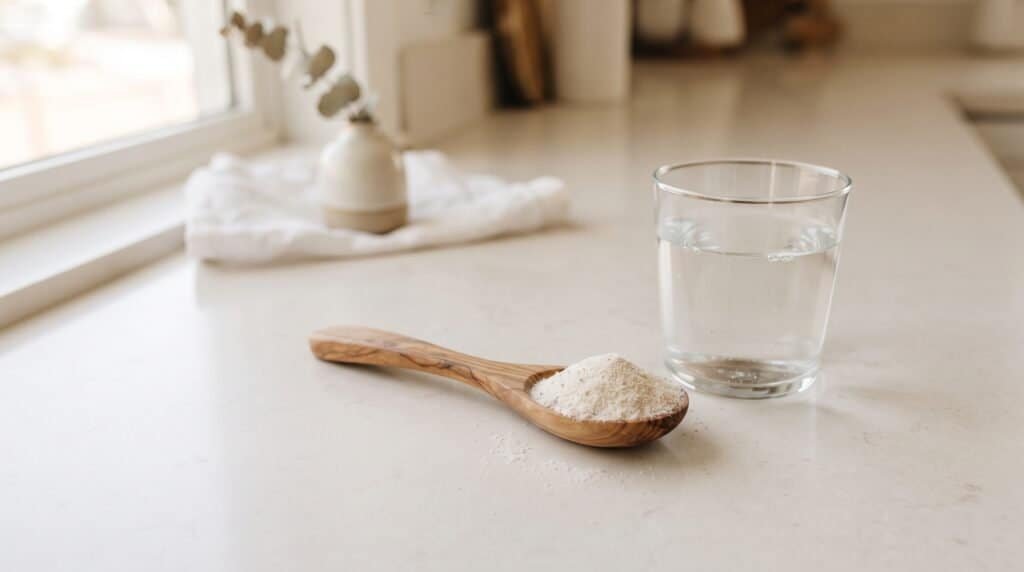
Psyllium is a soluble, gel-forming fiber — it absorbs water and turns into a thick gel in your gut.

Here’s the difference, in plain terms.

Psyllium husk

Psyllium is a soluble, gel-forming fiber — it absorbs water and turns into a thick gel in your gut. This makes it the most well-studied option for supporting regular digestion and, separately, for helping manage cholesterol levels as part of a broader diet.

Best for: People who want the most research-backed, general-purpose option. It’s the fiber most commonly recommended by doctors specifically because of how much clinical data exists behind it.

Watch out for: It needs to be taken with plenty of water — without enough liquid, it can have the opposite effect. Start with a small dose.

Inulin

Inulin is a prebiotic fiber, meaning its main job is feeding the beneficial bacteria in your gut rather than adding bulk. It’s naturally found in foods like chicory root, garlic, and onions, and is often added to protein bars and “high-fiber” packaged foods specifically because it’s cheap and nearly flavorless.

Best for: People focused specifically on gut microbiome health rather than digestive bulk.

Watch out for: Inulin is notorious for causing gas and bloating, more so than other fiber types, because it ferments quickly in the gut. If you’re sensitive to FODMAPs, this is usually the one to avoid or introduce very slowly.

Methylcellulose

Unlike psyllium and inulin, methylcellulose is a synthetic (lab-made) fiber. It’s not fermented by gut bacteria at all, which means it adds bulk without the gas that plant-based fibers can cause.

Best for: People who’ve tried psyllium or inulin and found them too gas-inducing — methylcellulose is the “gentlest” option for sensitive stomachs.

Watch out for: Because it isn’t fermented, it doesn’t feed gut bacteria the way psyllium or inulin do — so it’s a good choice for comfort, not for gut-health goals specifically.

Quick comparison

PsylliumInulinMethylcellulose
TypeSoluble, gel-formingSoluble, fermentable (prebiotic)Soluble, non-fermentable
Gas/bloating riskModerateHighLow
Best forGeneral digestion + cholesterol supportGut bacteria / microbiomeSensitive stomachs
SourcePlant (husk)Plant (root)Synthetic

Do you even need a supplement?

Worth saying clearly: supplements are a backup, not a replacement. Whole foods deliver fiber alongside vitamins, minerals, and water content that a powder can’t replicate — see our full list of high-fiber foods if you haven’t already. A supplement makes the most sense when your diet is already reasonably high in fiber but you’re still falling short of your target, not as a shortcut around eating vegetables.
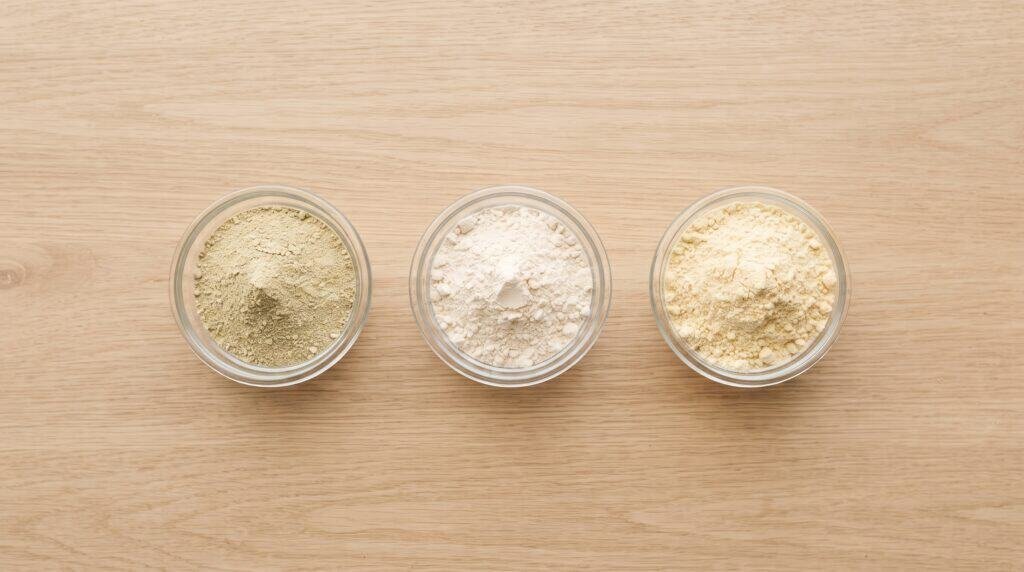
Worth saying clearly: supplements are a backup, not a replacement.

As always, if you have an existing digestive condition, talk to a doctor before starting any new supplement — some fiber types can interact with certain medications.
15 High-Fiber Foods to Add to Your Diet (Ranked by Grams)

15 High-Fiber Foods to Add to Your Diet Today

Not all “healthy” foods are created equal when it comes to fiber. Some foods you’d expect to be fiber powerhouses barely move the needle, while a few underrated options can single-handedly get you a third of the way to your daily goal. Here’s a practical, ranked list to build your grocery list around.

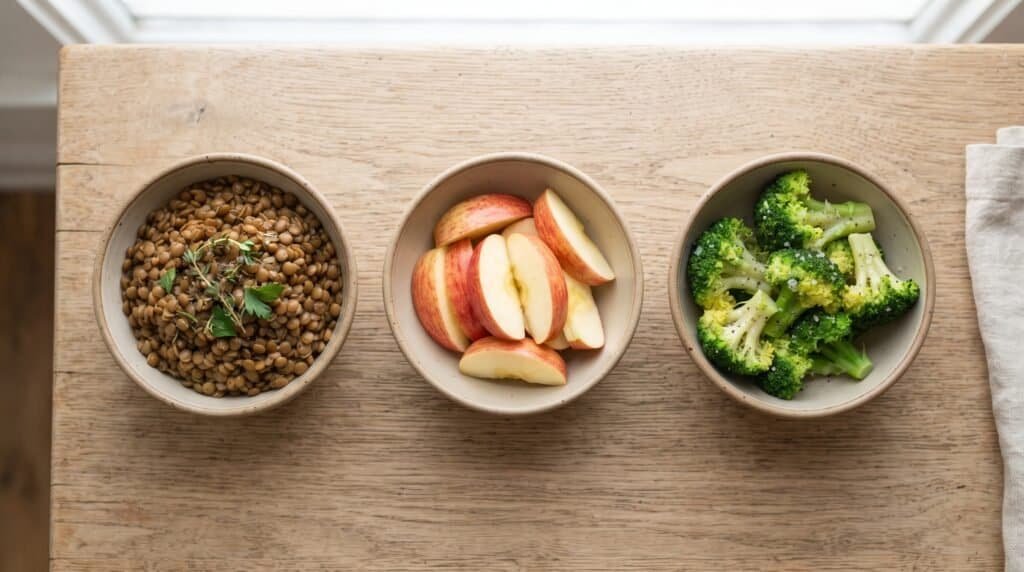
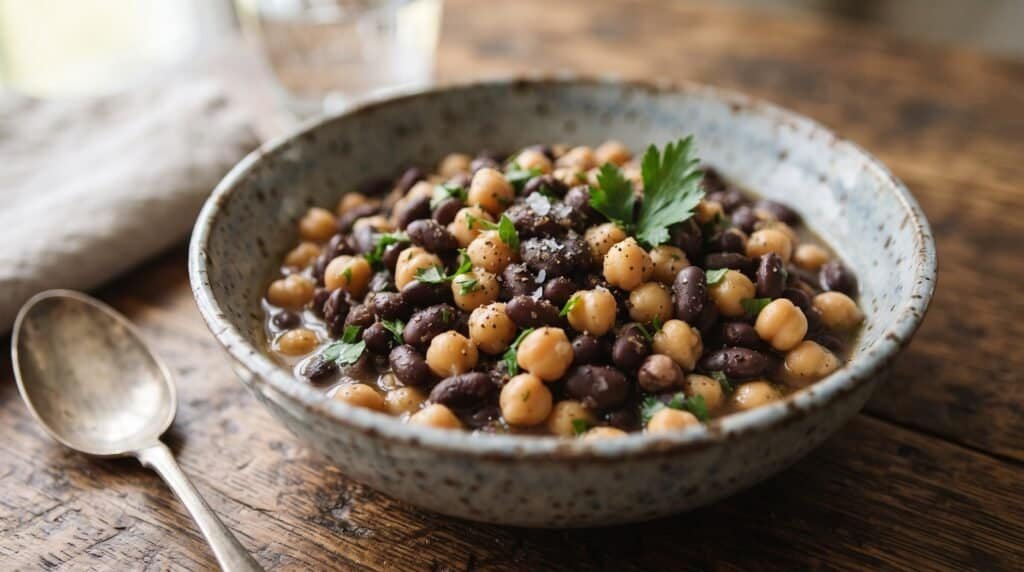
Mixed bean salad with parsley in a rustic bowl on wooden table.

Legumes (the biggest fiber wins)

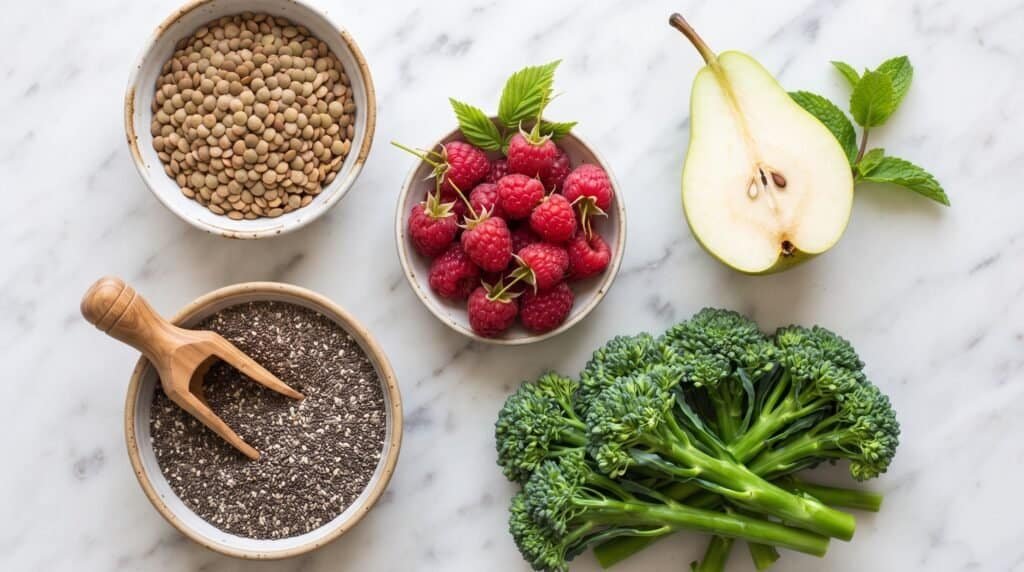
  1. Lentils — 15.6g per cooked cup. The single most efficient fiber food you can eat; add to soups, salads, or grain bowls.
  2. Black beans — 15g per cooked cup. Works in almost any savory dish.
  3. Chickpeas — 12.5g per cooked cup. Roast them for a crunchy snack or blend into hummus.
  4. Split peas — 16g per cooked cup. An underrated soup base.

Seeds and nuts

  1. Chia seeds — 10g per 2 tablespoons. Stir into yogurt, oatmeal, or smoothies; they also thicken liquids naturally.
  2. Flaxseed (ground) — 4g per 2 tablespoons. Best ground, not whole, so your body can actually absorb the fiber.
  3. Almonds — 3.5g per ounce (about 23 almonds). An easy snack upgrade.

Fruit

  1. Raspberries — 8g per cup. One of the highest-fiber fruits available.
  2. Blackberries — 7.6g per cup.
  3. Pears — 5.5g per medium pear (with skin on — that’s where most of the fiber lives).
  4. Apples — 4.4g per medium apple (again, skin on).

Vegetables and grains

  1. Broccoli — 5.1g per cooked cup.
  2. Quinoa — 5.2g per cooked cup, plus it’s a complete protein.
  3. Whole oats — 4g per cooked half-cup, and it’s one of the easiest fiber sources to eat daily.
  4. Popcorn (air-popped) — 3.5g per 3 cups. A legitimate whole grain and one of the most satisfying high-fiber snacks.

How to use this list

You don’t need to eat all 15. Pick 4–5 that fit your existing meals — a breakfast oats-and-chia combo, a lunch built around lentils or chickpeas, and an apple or handful of raspberries as a snack — and you’ll comfortably clear 25 grams without any special “diet food.”

For the full picture of how these add up against your daily target, see how much fiber you actually need per day.

For the full picture of how these add up against your daily target

How Much Fiber Do You Need Per Day?

It’s the first question everyone asks once they start fibermaxxing: what’s the actual target? The honest answer is that it depends slightly on your age and gender — but most adults are aiming for a number well above what they currently eat.

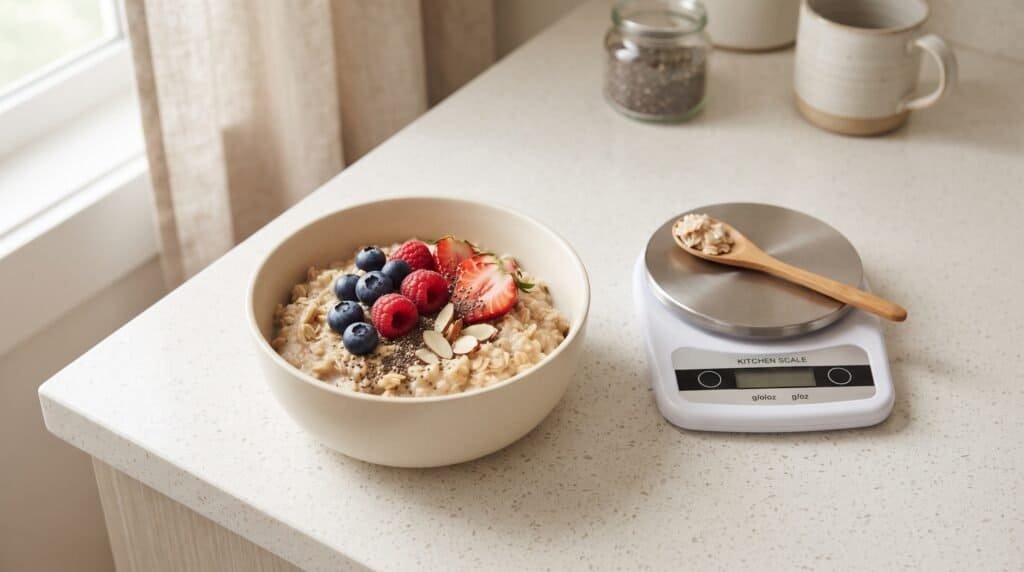
bowl of oats and mixed berries for high-fiber breakfast

The general daily fiber targets

As a general guideline used across most nutrition recommendations:

  • Adult men: around 38 grams per day
  • Adult women: around 25 grams per day
  • Women over 50: around 21 grams per day
  • Men over 50: around 30 grams per day

These numbers are based on general population guidelines and are a reasonable target for most healthy adults — though anyone with a digestive condition should check with a doctor before making major changes to fiber intake.

Why most people fall short

The average adult eats roughly half of their recommended fiber target. This isn’t usually because people are eating “unhealthy” — it’s because modern convenience foods (white bread, white rice, packaged snacks) are stripped of the fiber-rich parts of the plant during processing. You can eat a completely “normal” diet and still land at 12–15 grams a day without realizing it.

How to actually hit your number

Trying to hit 25–38 grams in one sitting is a recipe for stomach discomfort. The better approach is spreading fiber across every meal:

MealEasy fiber add-inGrams (approx.)
BreakfastOats + chia seeds8–10g
LunchHalf a cup of lentils or beans7–8g
SnackAn apple with the skin on4g
DinnerA cup of broccoli or a side of quinoa5g

Stack a few of these across the day and you’ll land close to your target without a single “diet” meal.

A word of caution: increase gradually

bowl of oats and mixed berries for high-fiber breakfast

If you’re currently eating well below the recommended amount, jumping straight to 30+ grams overnight can cause bloating or discomfort. Nutrition experts generally recommend increasing fiber intake gradually over 1–2 weeks and drinking more water as you do, since fiber needs water to move through the digestive system properly.

Next step

Once you know your target, the easiest way to hit it consistently is knowing which foods give you the most fiber per bite. That’s exactly what we cover in our high-fiber foods list.

Fiber Calculator

FiberMaxx · Daily Tracker

How much fiber did you eat today?

Add what you've eaten and instantly see how close you are to your daily fiber goal.

Your Profile

What You've Eaten Today

Your Progress

0g / 25g goal
You haven't added anything yet.
FiberMaxx — this tool is for general informational purposes only and is not a substitute for medical advice.

What Is Fibermaxxing? The Fiber Trend Everyone’s Talking About

The Complete Beginner’s Guide

If your For You Page has suddenly filled up with chia puddings, bean bowls, and people bragging about “hitting 40 grams,” you’ve already met fibermaxxing. It’s one of the fastest-growing wellness searches this year, and unlike most viral diet trends, this one is actually grounded in solid nutrition science.

Here’s everything you need to know before you jump in.

What does "fibermaxxing" actually mean?

What does “fibermaxxing” actually mean?

Fibermaxxing is the practice of deliberately maximizing your daily fiber intake — usually by stacking high-fiber foods into every meal rather than treating fiber as an afterthought. The name follows the same pattern as other “maxxing” trends (like sleepmaxxing or looksmaxxing): take one health variable, optimize it aggressively, track your progress.

What makes fibermaxxing different is that it’s not a fad built on pseudoscience. Most nutrition guidelines have recommended 25–38 grams of fiber a day for years, and most people fall well short of that number. Fibermaxxing turns an under-discussed nutrition gap into something people are actually excited to fix.

Why is fiber suddenly such a big deal?

Why is fiber suddenly such a big deal?

A few things collided at once:

  • The gut health boom. Years of gut-microbiome content primed people to care about digestion, and fiber is one of the few things that reliably feeds beneficial gut bacteria.
  • Protein fatigue. After years of “protein maxxing” content, fiber is the natural next macro to obsess over — it’s cheap, plant-based, and pairs well with a protein-forward diet instead of competing with it.
  • Simple, trackable wins. Fiber goals are easy to visualize (grams per day), easy to gamify, and satisfying to hit — perfect for a generation that already tracks steps, sleep, and macros.

What are the real benefits of eating more fiber?

Fiber isn’t just an internet trend — it’s one of the most consistently recommended nutrients in mainstream nutrition guidance, associated with:

  • Supporting regular digestion and gut bacteria diversity
  • Helping you feel fuller for longer after meals
  • Supporting healthy blood sugar and cholesterol levels as part of a balanced diet
  • Adding volume to meals without adding many calories

How do you start fibermaxxing?

You don’t need to overhaul your diet overnight. Three simple starting moves:

  1. Add one high-fiber food to breakfast. Swap white toast for oats, or stir chia seeds into yogurt.
  2. Make legumes your default lunch add-in. Beans, lentils, and chickpeas are some of the highest-fiber foods available and are easy to batch-cook.
  3. Track your total for one week. Most people are surprised by how far below 25g they actually are — seeing the number is often the biggest motivator.

For a full breakdown of exactly

how much fiber you need and which foods get you there fastest, check out our guides on how much fiber you need per day and the best high-fiber foods to eat.

The bottom line

Fibermaxxing is a rare case of an internet trend and actual nutrition science pointing in the same direction. Whether you came for the trend or the health benefits, the habit itself — eating more plants, more legumes, more whole grains — is one of the few “diet trends” worth keeping around.